


By Indus Medical Associates
May 25, 2026
Sales
Flu
Disease
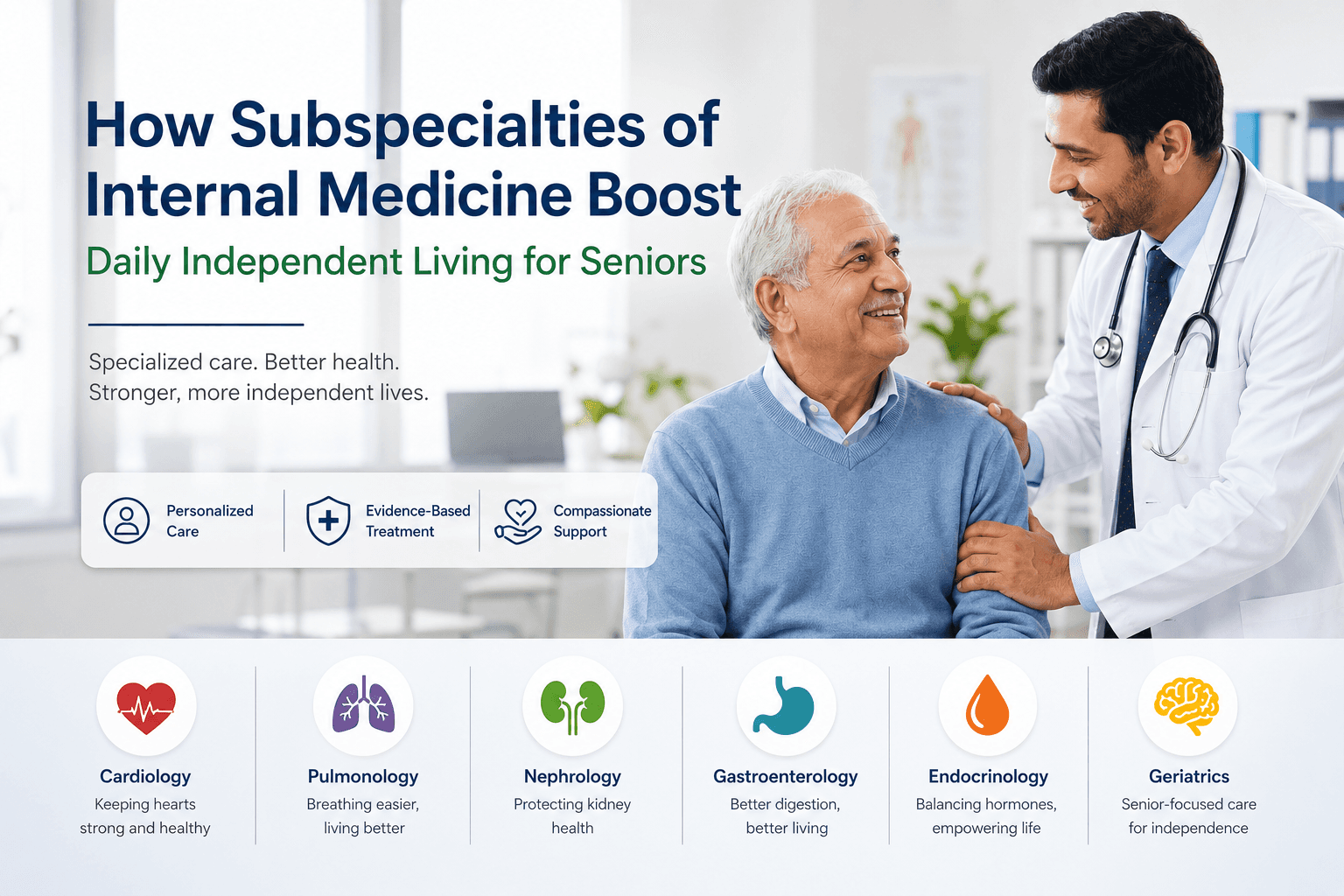
Nothing is more valuable than peace of mind, and taking care of your health can help support your well-being. As people grow older, their healthcare needs may change. Healthy habits throughout life can support health in later years, although aging and health outcomes also depend on genetics, environment, and access to healthcare.
It is never too late to adopt healthier habits. Even if you have not always followed a consistent routine, you can still take steps to support your well-being at age 60 or older.
Depending on your medical history and health needs, you may benefit from care provided by specialists in internal medicine specialties. A primary care physician can assess your health concerns and determine whether specialist care may be appropriate.
This guide explains internal medicine subspecialties, their potential role in healthy aging, and how coordinated healthcare may help older adults manage medical conditions and maintain daily functioning.
Table of Contents
What Are Internal Medicine Specialties? Myths and Realities
How Internal Medicine Subspecialties May Support Daily and Independent Living
Challenges Older Adults May Face Without Appropriate Specialized Care
Frequently Asked Questions
What Are Internal Medicine Specialties? Myths and Realities
As people grow older, they may need additional support managing their health. Chronic conditions sometimes require focused evaluation and treatment from healthcare professionals with relevant expertise.
However, not everyone understands the role of internal medicine specialists. What do these physicians do to support diagnosis, treatment, and preventive care? What are the common myths and realities about internal medicine subspecialties?
The following table addresses some common misconceptions.
Medical Focus | Myth | Reality |
|---|---|---|
Internal medicine care | Internal medicine physicians only treat common or minor health conditions. | Internal medicine physicians can evaluate and manage a wide range of conditions, including complex and chronic diseases. |
Need for specialists | Older adults need only a family physician and never require specialists. | Some older adults benefit from specialist care, while others can receive appropriate care from a primary care physician. The decision depends on individual health needs. |
Multiple specialties | Consulting more than one specialist leads to confusion. | Communication and coordination among healthcare professionals can help align treatment plans, medication decisions, and follow-up care. |
The right approach depends on an individual's health history, current symptoms, existing diagnoses, and treatment goals. A primary care physician can often help determine whether a referral to a specialist is needed.
How Internal Medicine Subspecialties May Support Daily and Independent Living
Internal medicine subspecialties provide focused expertise in particular conditions or areas of health. Older adults may benefit from this care when their symptoms, medical history, or treatment needs warrant specialist involvement.
Depending on their area of expertise, subspecialists may help patients manage medical conditions that affect daily activities and independence. They may also coordinate with primary care physicians and other healthcare professionals when additional support is needed.
Not every adult aged 60 or older needs a subspecialist. The appropriate level of care depends on individual circumstances and should be discussed with a qualified healthcare professional.
Here are four ways appropriate medical care may support healthy aging.
Reason #1: Better Management of Chronic Diseases
Diabetes, kidney disorders, autoimmune conditions, cardiovascular diseases, and arthritis are among the health concerns that may affect older adults.
Depending on the condition, treatment may involve a primary care physician, an internal medicine subspecialist, or another healthcare professional. Their expertise can help patients understand their diagnoses, review treatment options, and manage ongoing health concerns.
Effective management may help some people maintain their usual activities and quality of life. However, outcomes vary according to the condition, its severity, and the individual's overall health.
Reason #2: Individualized Treatment Strategies
Every older adult has a different medical history, lifestyle, and set of healthcare needs. Two people of the same age may require very different approaches to treatment.
Internal medicine subspecialists can recommend individualized care based on a patient's condition, medical history, and clinical assessment. Depending on the diagnosis, a treatment plan may include medication, regular monitoring, lifestyle recommendations, diagnostic testing, or other appropriate interventions.
The goal is to select care that addresses the patient's needs while considering potential benefits, risks, and personal preferences.
Reason #3: Medication Management
Older adults may have several health conditions and take multiple medications. Taking several medicines can increase the risk of side effects, drug interactions, or duplicate prescriptions.
Healthcare professionals involved in a patient's care can review medications and determine whether any changes may be appropriate. A coordinated medication review can also identify potential concerns involving over-the-counter medicines and dietary supplements.
Patients should not stop, start, or change prescribed medication without consulting a qualified healthcare professional. Keeping an up-to-date list of medications and supplements can help make these reviews more effective.
Reason #4: Identifying Potential Complications Early
Regular follow-up and appropriate management of chronic conditions may help healthcare professionals identify changes in health and address certain complications early.
Depending on a patient's condition, care may involve monitoring symptoms, reviewing test results, adjusting medication, or recommending additional evaluation.
For some patients, effective ongoing care may reduce the risk of avoidable emergency visits or hospital admissions. However, no treatment plan can prevent every complication, emergency, or hospitalization.
Note: These are some reasons older adults may benefit from specialist care. The need for a subspecialist varies from person to person. A primary care physician can assess health concerns and determine whether a specialist referral is appropriate.
Challenges Older Adults May Face Without Appropriate Specialized Care
When appropriate medical care is delayed or difficult to access, some patients may experience delays in diagnosis, gaps in follow-up, or difficulties managing chronic conditions. The impact depends on the condition, its severity, and the healthcare services available.
Challenge #1: Delays in Diagnosing Chronic Diseases
A delay in medical assessment can sometimes delay the diagnosis of a health condition and the start of appropriate treatment.
For example, symptoms that may indicate a kidney disorder should be evaluated by a healthcare professional. A primary care physician can often begin the assessment and arrange a referral to a nephrologist or another specialist when indicated.
The appropriate next steps depend on the patient's symptoms, examination, medical history, and test results. Seeking timely medical advice can help determine whether further investigation is needed.
Challenge #2: Difficulty Managing Multiple Health Conditions
Older adults may have more than one health condition at the same time. For example, diabetes, respiratory illnesses, and arthritis may occur together.
Managing multiple conditions may require coordinated follow-up, medication reviews, and communication among healthcare professionals. Without appropriate assessment and monitoring, some conditions may become more difficult to manage.
A primary care physician or relevant subspecialist can help review the patient's needs, assess treatment options, and coordinate care when multiple healthcare professionals are involved.
Challenge #3: Changes in Mobility and Independence
Several factors can affect an older adult's physical activity and independence, including joint pain, muscle weakness, breathing difficulties, and certain neurological conditions.
The appropriate treatment depends on the underlying cause and may involve a primary care physician, an internal medicine subspecialist, a physiotherapist, or another qualified professional.
Assessment and suitable support may help some individuals maintain mobility and manage daily activities. However, results vary according to a person's health, functional abilities, and circumstances.
Frequently Asked Questions
Question 1: What Are Internal Medicine Subspecialties?
Internal medicine can be compared to the trunk of a tree, with its subspecialties forming the branches. Internal medicine physicians receive medical training before pursuing additional training in a subspecialty.
This additional training provides focused expertise in evaluating, monitoring, and treating particular conditions or groups of conditions. Examples include cardiology, endocrinology, gastroenterology, nephrology, and pulmonology. Training pathways and qualifications vary by specialty and country.
Question 2: How Can Internal Medicine Subspecialties Help Older Adults?
When specialist care is appropriate, subspecialists can provide focused assessment, treatment recommendations, and ongoing monitoring for conditions within their area of expertise.
Depending on the patient's needs, care may also involve medication review, lifestyle recommendations, rehabilitation, or coordination with other healthcare professionals. The potential benefits and outcomes vary from person to person.
Question 3: Can Subspecialty Care Reduce Hospitalizations?
Specialist care and appropriate management of chronic conditions may help reduce the risk of avoidable hospitalizations for some patients.
Regular assessments, monitoring, and suitable treatment can help healthcare professionals identify changes in a patient's condition. However, specialist care does not guarantee fewer hospitalizations or emergency-room visits. Some conditions may still require urgent or hospital-based treatment.
Question 4: When Should an Older Adult Consult an Internal Medicine Subspecialist?
An older adult may benefit from specialist care when symptoms persist, a medical condition is difficult to manage, additional evaluation is needed, or a primary care physician recommends a specialist assessment.
For example, some cases involving arthritis, osteoporosis, kidney disease, or breathing difficulties may require further evaluation by an appropriate healthcare professional. The right specialist depends on the patient's symptoms, diagnosis, and overall health.
New, severe, or rapidly worsening symptoms should be assessed promptly. Potentially life-threatening symptoms require emergency medical attention.
Final Thoughts
Healthy aging involves more than managing individual medical conditions. It can also include regular checkups, appropriate medication use, physical activity suited to individual abilities, balanced nutrition, and timely medical assessment.
Internal medicine subspecialists can play an important role when a patient's health needs require focused expertise. Working with a primary care physician and coordinating care among relevant professionals may help older adults make informed healthcare decisions and manage ongoing conditions.
If you have concerns about your health or a chronic condition, speak with a qualified healthcare professional to determine which type of care may be appropriate for you.
Medical Disclaimer: This article is for general educational purposes only and is not a substitute for professional medical advice, diagnosis, or treatment. It does not establish a doctor-patient relationship or recommend a particular provider. Medical decisions should be based on an individual's circumstances and an assessment by a qualified healthcare professional. Do not delay seeking medical advice because of information in this article. Seek emergency care for potentially life-threatening symptoms.
@ 2025 - Indus Medical Association