


By Indus Medical Associates
May 25, 2026
Sales
Flu
Disease
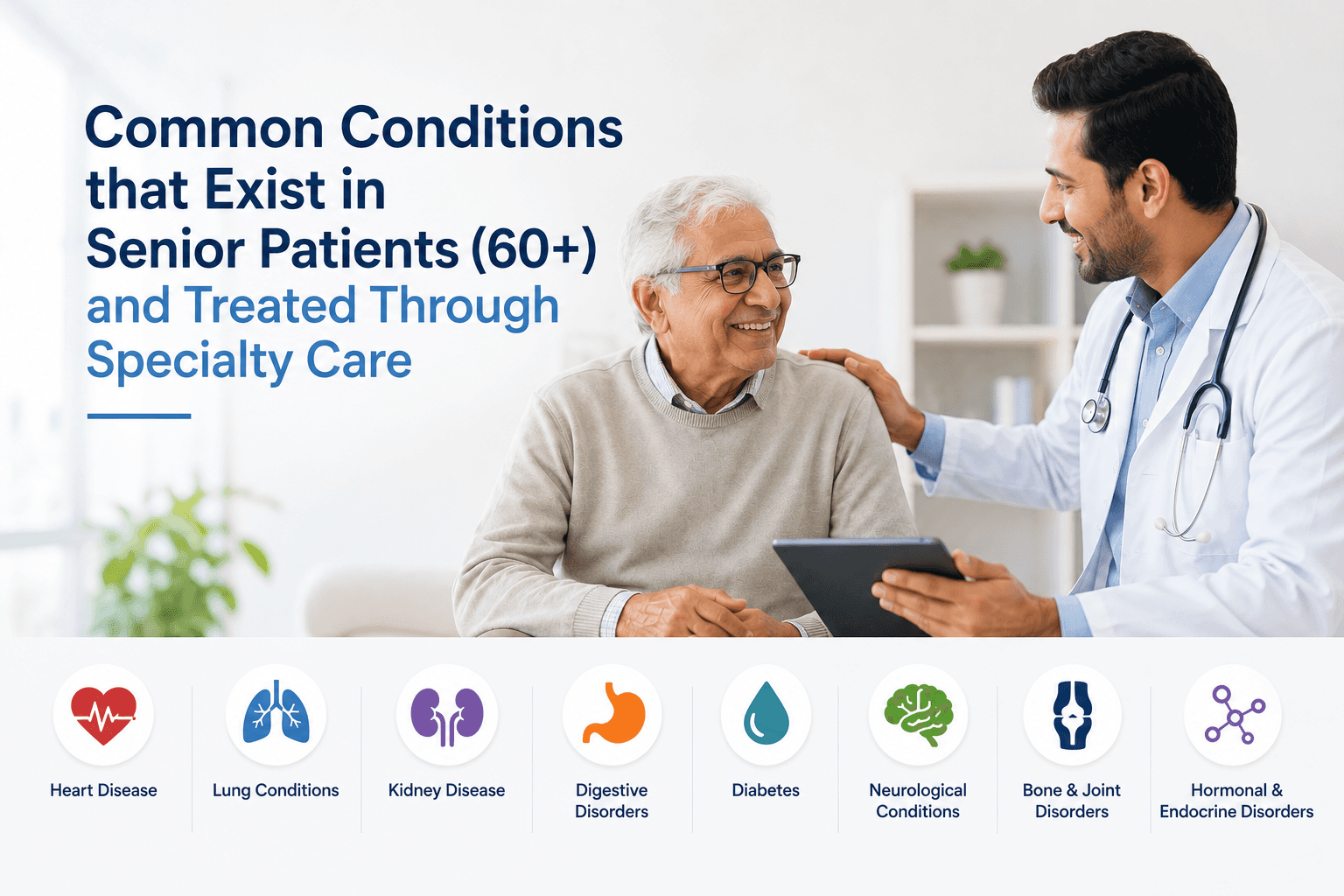
There are a number of conditions that a senior patient may experience. However, it is not necessary that all health concerns will appear, and you, as a 60+ individual, need to worry about future illnesses. Remember, at Indus Medical Associates and with the help of primary doctors near me, there are huge possibilities of preventing chronic diseases. In this blog, you are told about the ways to manage common conditions in your age group. Also, how to treat and get yourself diagnosed is mentioned in this blog.
If you have any questions regarding this blog, please don’t hesitate to let us know.
Table of Contents H1: Introduction: Need for a Specialty Care Physician for Senior Patients H1: Role of Primary Care Doctors Near Me for Seniors’ Health Management H1: Common Conditions in Patients Above 60 Years of Age H2: Chronic Pain Management H1: Frequently Asked Questions |
Introduction: Need for a Specialty Care Physician for Senior Patients
Specialized medical support and attention are required at all ages. But when it comes to the 60+, well, well, well! You might need specialty health care more than ever. You might think;
What are the reasons to seek help from any special care physicians?
What am I doing wrong that I need a specialist?
How am I going to manage and handle my health concerns without a specialist?
There could be other questions too, but the ones mentioned above are pretty common. See, the best answer to all these questions is your age. With age, the systems and organs of the body’s performance start to decline. Once that happens, you are bound to take help from the medical professionals.
Anyhow, some of the most valid reasons why you need specialty health care are mentioned below.
#1: Focused treatment is given where you receive symptom management, prevention of complicated diseases, and ways to live a happy, independent life.
#2: Regular check-ups, routine screening, vaccinations, etc., are provided in advance before any diseases emerge out of the blue.
#3: Rehabilitation services, as well as prolonged treatments, are strategically planned by specialty care physicians.
Note: At Indus Medical Associates, you get the best specialty health care facilities. Dr. Azam, the pioneer of awareness programs, etc., is always there to help you as a senior citizen.
Role of Primary Care Doctors Near Me for Seniors’ Health Management
If and when you fall sick and have no idea where to go for the consultation, the physicians you look for are associated with primary healthcare. It means these doctors tell you about the basics, which include:
#1: Primary care near me and you take care of senior patients as the first point of contact in any clinic or hospital.
#2: Referrals are given to the patients after determining the root cause, treatment strategies, and preventive measures. These are all done on the surface level. However, for the deeper diagnosis, treatment, and preventive measures, specialists take over the charts.
#3: Regular screenings, lab work, and medicine management are carried out by these primary care physicians. The specialization part is played by the speciality care physician who knows the further details of diagnosis and advanced ways of treatment.
Primary care doctors work in the following areas;
Preventive screenings
Medication management
Scheduling vaccinations
Mental health assessments
Nutritional guidance
Valuations on mobility and fall risk
Note: Many senior patients go through several chronic diseases at the very same time: the time when you have to rely on speciality health care.
Common Conditions in Patients Above 60 Years of Age
What conditions are common at 60+? Review this list for an overview of diseases to monitor.
Heart Diseases and Conditions
Joint Disorders and Arthritis
Vision and Hearing Loss Conditions
Digestive Disorders
Mental Health in Aging Adults
Details about these diseases are provided below.
Heart Diseases and Conditions
Which heart-related diseases are risky at 60+?
Hypertension
Arrhythmia
Heart Failure
Cardiac Arrest
Coronary Artery Disease
These conditions affect people over 60 the most.
Another frequently asked question is: How do specialty health care practitioners address all these concerns? Specialty care doctors manage these issues through testing, lifestyle modification guides, medications, and heart monitoring. They also monitor cholesterol, blood pressure, and pulse irregularities.
Joint Disorders and Arthritis
What kind of joint disorders and arthritis are risky for elderly patients?
Gout
Osteoarthritis
Rheumatoid Arthritis
Limited mobility
Limited independence
If you are over 60, symptoms may include joint discomfort ranging from mild to severe pain, reduced flexibility, limited movement, swelling, and stiffness.
Orthopedics perform detailed physical checkups. Rheumatologists confirm diagnoses, recommend therapies, prescribe medication, and guide rehabilitation.
Vision and Hearing Loss Conditions
What sort of diseases or health conditions are associated with vision and hearing?
Cataract
Glaucoma
Diabetic Retinopathy
Macular Degeneration
Age-bound hearing loss
Look out for symptoms that may include: difficulty in communication, blurry vision, dizziness, and not enjoying social gatherings, etc. Specialty care physicians who belong to audiology and ophthalmology handle the conditions through several means. For instance, hearing and vision exams, giving hearing aids or prescription glasses, cataract surgery, and, in some cases, rehabilitation therapies.
Digestive Disorders
All right, this is another common condition in senior patients where the need for a specialty care physician is required. What happens in digestive disorders?
Ulcers
Acid Reflux
Live Disorders
Constipation
Gallbladder Disease
Irritable Bowel Syndrome
However, when we discuss the causes of these health issues, they link up to prolonged use of medications and decreased digestive functionality in the body. There are ways to handle them, though! Endoscopic procedures, imaging, and lab tests are some of them.
Mental Health in Aging Adults
Mental health is one of the biggest concerns of aging individuals. It is forgotten and often ignored that people in their senior years of life are lonelier and more depressed than anyone else. Why is it so?
Chronic diseases require them to take stronger medications. The ones that actually play a part in the cognitive decline.
Memory loss and less independence as compared to the prime years of life.
Depression, anxiety, stress, and social isolation cause further complications in mental health.
Interestingly, it is very easy for psychiatrists, therapists, and counselors to help these individuals get better. Remember, if the elderly are not taken to the right doctor at the right time, they may develop dementia or Alzheimer's disease.
Chronic Pain Management
Chronic pain is more like a part and parcel of seniors’ lives. But the question that makes them think is, what actually causes all of this pain? Well, it is mostly associated with damaged nerves, past injuries, osteoporosis, arthritis, or fibromyalgia.
The question is: how does specialty health care help older adult patients?
The specialty health care is meant to handle and offer help in such a way that seniors feel relief instantly. However, at first, determining the severity of pain is a must. Then, the patients are given options to choose from. For example, medication is for the least crucial cases. Likewise, injections, rehabilitation, and therapies are offered.
Frequently Asked Questions
Question 1: Who is a specialty physician?
Answer: This is a person who has medical degree with the advanced training in particular organ or function of a body. For example, lungs, nervous system, or bones. These physicians take responsibilities of managing complicated health matters, treating with the most modern and advanced procedures, and sort out preventive measures for the senior patients. Interestingly, these doctors also work with the primary care doctors who ensures that the patients receive the most accurate diagnosis.
Question 2: Why do seniors need specialty care more than anyone else?
Answer: After the development of any serious or fatal disease, all a senior person need is the help of focused medical expertise. With the guidance, support, and medical care of specialists, senior patients manage to bounce back to normal and healthier lifestyle. It means the specialist is the one who can reduce the risk of prolonged diseases, minimize complications, and also bring change in the overall life of the person.
Question 3: How are primary doctors near me of any use?
Answer: When you look for “primary doctors near me”, it helps you in number of ways. For example, they connect you with the right specialist care doctor, check you regularly to see if there is any prominent symptom of a chronic disease or not, handles medications, and also gives you vaccinations. Lifestyle guidance and how to remain healthy at 60 are also provided by these champs!
Question 4: What sort of health concerns require a specialist for people above 60?
Answer: Common concerns at 60+ include heart diseases, diabetes, arthritis, respiratory disorders, vision problems, cancer, neurological conditions, and osteoporosis. Memory related diseases are also the common concern for individuals above 60. For example, Alzheimer’s disease and Parkinson’s disease are common too.
Question 5: When is the right time to visit a physician for special treatment?
Answer: As soon as the patients feel or go through a complex health condition, they should consult with a specialist. It is so that the specialist makes the diagnosis and starts the treatment plan. Mostly, diabetes, neurological disorders, respiratory diseases, or conditions are in need of specialty health care.
@ 2025 - Indus Medical Association